

OLED and QLED in 2026
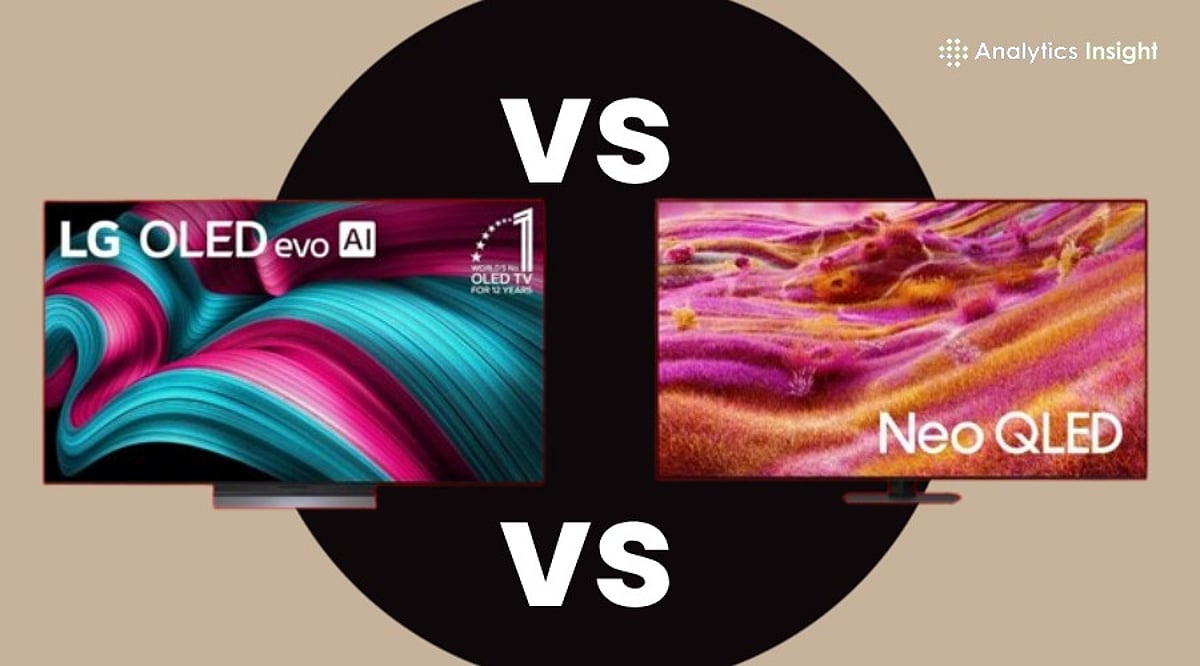
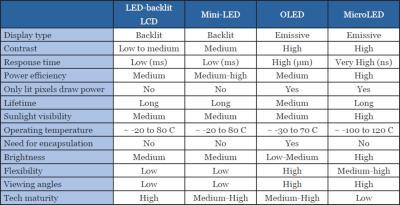
OLED and QLED represent the two dominant premium TV technologies as of late 2026. OLED (Organic Light Emitting Diode) continues to be prized for its perfect blacks, infinite contrast ratio, and wide viewing angles. Each pixel in an OLED panel emits its own light, allowing for incredibly detailed and realistic images. QLED (Quantum Dot LED), primarily championed by Samsung, uses a traditional LED backlight combined with quantum dots to enhance color and brightness.
While OLED has historically held an edge in picture quality, QLED has made significant strides in recent years. QLED TVs generally achieve higher peak brightness levels, making them better suited for brightly lit rooms. They've also become more energy efficient. Both technologies have matured; the biggest improvements now are in refining image processing, reducing burn-in risk in OLEDs, and pushing refresh rates higher.
The core difference is light production. OLED is emissive, meaning the pixels are the light source. QLED is transmissive and relies on a backlight shining through a quantum dot layer. This affects contrast and response times. LG Display makes most large OLED panels, while Samsung leads the QLED market.
By 2026, we're seeing a greater convergence in price between high-end OLED and QLED models. The choice often comes down to viewing environment and personal preference. Someone prioritizing cinematic experience in a darkened room will likely favor OLED, while someone wanting a brighter, more versatile display might lean towards QLED. Both are capable of delivering stunning images, and the gap continues to narrow.
How true refresh rate works
’True refresh rate’ refers to how many times per second a display updates the image on the screen, measured in Hertz (Hz). A 60Hz refresh rate means the screen redraws the image 60 times every second. Higher refresh rates lead to smoother motion and reduced motion blur, which is especially important for fast-paced content like action movies and video games.
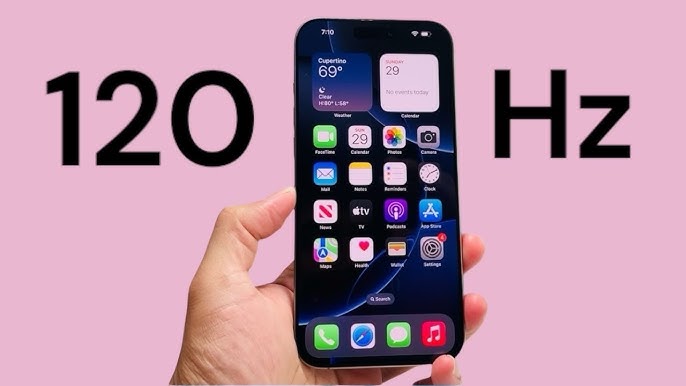
Consider a 120Hz refresh rate. It’s a noticeable step up from 60Hz, providing a significantly clearer and more fluid picture. 144Hz and 240Hz further refine this, though the improvements become less dramatic as you climb higher. You’ll often see these higher rates marketed towards gamers who need the fastest possible response times.
However, there's a limit to what the human eye can perceive. Most people can comfortably distinguish up to around 120Hz, and beyond that, the benefits become increasingly subtle. While a 240Hz panel can look slightly better than a 120Hz panel, the difference isn't always obvious and might not justify the extra cost. It’s a case of diminishing returns.
Refresh rate matters most during fast movement. Low rates cause blur or strobing. Your source content has to match the hardware to see a difference; a 120Hz TV won't change the look of a 24fps movie unless the processor adds artificial frames.
The marketing behind motion rate
’Motion rate’ is a metric frequently used by TV manufacturers, and it’s often a source of confusion. Unlike true refresh rate, motion rate isn't a standardized measurement. It’s typically calculated using a combination of the panel’s true refresh rate and the effects of frame interpolation and backlight strobing.
Frame interpolation creates fake frames to smooth motion, while backlight strobing flickers the light to hide blur. These tricks improve perceived clarity but often add artifacts. A TV with a 60Hz panel frequently claims a 120Hz 'motion rate' by using these methods.
The problem is that motion rate is often misleading. A higher motion rate doesn’t necessarily mean a better viewing experience. In fact, aggressive frame interpolation can create a distracting "soap opera effect’, making movies and TV shows look unnatural. Backlight strobing can also reduce brightness and introduce flicker. It"s a marketing tactic to make lower refresh rate TVs appear more competitive.
Essentially, motion rate is a manufacturer’s attempt to quantify perceived motion smoothness, and it’s rarely a reliable indicator of actual performance. I always recommend focusing on the true refresh rate as the primary metric when evaluating a TV’s motion handling capabilities. Don't be swayed by inflated motion rate numbers.
- Frame interpolation creates artificial frames to fill gaps between real ones.
- Backlight strobing reduces blur by rapidly pulsing the light source.
- The soap opera effect is the unnatural, overly smooth look caused by high interpolation.
- Focus on True Refresh Rate: The most reliable metric for motion handling.
Motion Rate Techniques
- Frame Interpolation - Creates intermediate frames to smooth motion. Can introduce the ‘soap opera effect’ making content look unnatural and sometimes creating visual artifacts.
- Black Frame Insertion (BFI) / Backlight Strobing - Briefly inserts a black frame between actual frames, improving motion clarity. Reduces brightness significantly and can cause flicker, especially noticeable in bright scenes.
- Motion Smoothing (Auto Motion Plus, TruMotion, etc.) - A marketing term often encompassing frame interpolation and other techniques. Results vary greatly by manufacturer and implementation, often prioritizing smoothness over accuracy.
- Sample and Hold - The standard method for displaying images on LCDs (QLED). Each frame is displayed until the next one arrives, leading to potential motion blur, particularly with fast-moving content. This is the baseline against which other techniques are measured.
- Motion Judder Reduction - Attempts to correct uneven frame pacing, often caused by content with 24 frames per second (fps). Can sometimes introduce its own timing issues if not implemented well.
- Response Time Enhancement (Overdrive) - Used primarily in LCDs (QLED) to reduce ghosting. Aggressive settings can cause inverse ghosting (trailing light artifacts).
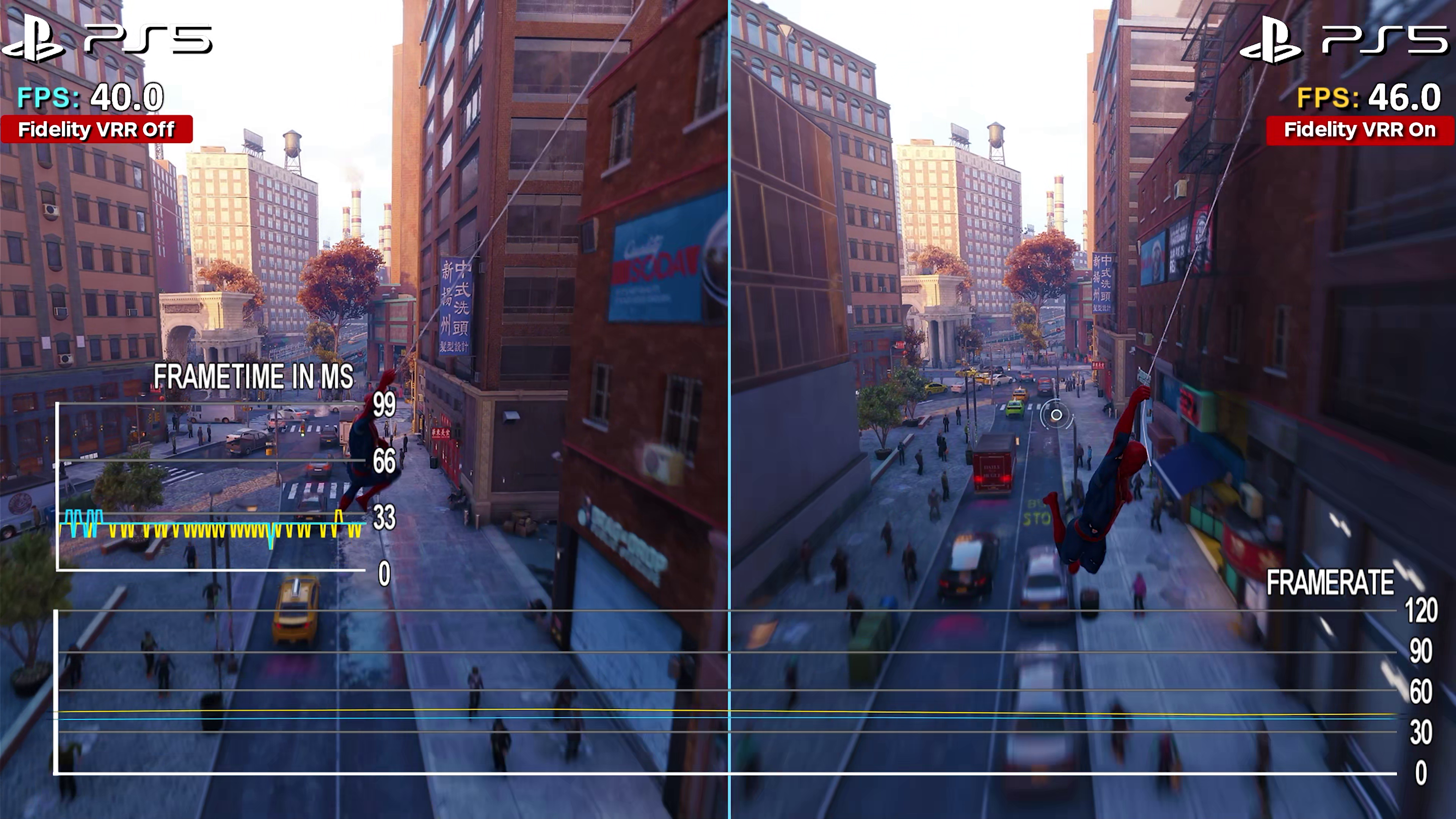
- Variable Refresh Rate (VRR) - (FreeSync, G-Sync) - Synchronizes the TV’s refresh rate with the output of a gaming console or PC. Reduces screen tearing and stuttering, but doesn’t inherently *increase* the refresh rate itself.
OLED Refresh Rate Capabilities (2026)
In 2026, most OLED TVs offer native refresh rates of 60Hz, 120Hz, and increasingly, 144Hz. The 120Hz panels are particularly popular for gaming and high-action content. Achieving higher refresh rates on OLED panels presents unique challenges, primarily related to response time and potential burn-in.
OLED pixels have a finite response time – the time it takes for a pixel to change color. While OLED response times are generally very fast, pushing them to extremely high refresh rates can introduce artifacts or require complex processing to compensate. There are concerns about increasing the risk of burn-in with prolonged use at very high refresh rates, although manufacturers have made significant progress in mitigating this issue through pixel shifting and other technologies.
Variable Refresh Rate (VRR) technologies like AMD FreeSync and NVIDIA G-Sync are well-supported on OLED TVs. These technologies dynamically adjust the refresh rate of the display to match the frame rate of the connected device, eliminating screen tearing and stuttering. OLED’s fast response times make it an excellent platform for VRR gaming.
Concerns about OLED and fast-paced gaming – specifically image retention – have largely subsided with recent advancements in panel technology and software algorithms. However, it’s still advisable to vary content and avoid displaying static images for extended periods. The newest OLED iterations are proving very robust, but caution is still warranted.
LG’s OLED evo panels, for example, feature improved brightness and heat dissipation, allowing for more sustained high refresh rate performance. Sony’s OLED TVs also incorporate advanced image processing to optimize motion handling and reduce burn-in risk. The trend is towards OLED panels that can confidently deliver smooth, high-refresh-rate gaming experiences.
QLED Refresh Rate Performance (2026)
QLED TVs in 2026 commonly offer refresh rates of 60Hz, 120Hz, and 144Hz. Some premium QLED models even boast 240Hz refresh rates, though these are often achieved through advanced motion interpolation techniques. QLED generally handles high refresh rates more easily than OLED due to its different underlying technology.
Because QLED relies on a backlight, it doesn’t suffer from the same response time limitations as OLED. This allows QLED panels to achieve higher peak refresh rates without introducing as many artifacts. Samsung, in particular, has been pushing the boundaries of QLED refresh rates with technologies like Motion Xcelerator Turbo+, which utilizes backlight strobing to effectively increase the perceived refresh rate.
QLED also has an advantage in brightness. The brighter display allows for more effective backlight strobing, further reducing motion blur. However, as with OLED, aggressive backlight strobing can introduce flicker and reduce overall brightness. It's a tradeoff.
Response times on QLED panels have improved significantly in recent years. While they generally aren’t as fast as OLED response times, the difference is becoming less noticeable, particularly on higher-end models. QLED’s ability to achieve high peak brightness and refresh rates makes it a strong contender for gamers and viewers who prioritize smooth motion.
Refresh rates for gaming
Refresh rate is incredibly important for gaming, but it’s just one piece of the puzzle. Frame rate (FPS) and input lag are equally crucial. Frame rate is how many frames per second your gaming device is rendering, while input lag is the delay between your actions (e.g., pressing a button) and the corresponding response on the screen.
Ideally, you want to match your refresh rate to your frame rate. For example, if you have a 120Hz monitor, you want your game to run at 120 FPS to experience the smoothest possible gameplay. If your frame rate is lower than your refresh rate, you’ll experience screen tearing or stuttering. If your frame rate is higher, you're wasting potential smoothness.
This is where Variable Refresh Rate (VRR) comes in. VRR technologies like FreeSync and G-Sync dynamically adjust the refresh rate of the display to match the frame rate of the game, eliminating tearing and stuttering. This is a game-changer for competitive gaming.
The ideal refresh rate depends on the type of game you’re playing. Fast-paced shooters benefit the most from high refresh rates (120Hz or higher), as they require quick reaction times and precise aiming. Slower-paced strategy games or RPGs may not require as high a refresh rate, and 60Hz or 120Hz may be sufficient.
OLED vs QLED TV Gaming Recommendations - 2026
| Game Type | Refresh Rate Priority | OLED Recommendation | QLED Recommendation | Explanation |
|---|---|---|---|---|
| First-Person Shooters (FPS) | High | Yes | Maybe | FPS games benefit significantly from OLED's near-instantaneous pixel response times, minimizing motion blur. QLED can perform well with higher refresh rates, but may exhibit more blur. |
| Role-Playing Games (RPG) | Medium | Yes | Yes | RPG’s often prioritize visual fidelity and immersion over extremely high frame rates. Both OLED and QLED can deliver excellent experiences, though OLED’s contrast enhances the visual storytelling. |
| Racing Games | High | Yes | Yes | Racing games demand smooth, clear motion. Both OLED and QLED with high refresh rates (120Hz or higher) are suitable. OLED’s response time provides an edge in tracking fast-moving objects. |
| Fighting Games | High | Yes | Maybe | Similar to FPS, fighting games require precise timing and minimal input lag. OLED's faster response times are advantageous. QLED may struggle to match this level of clarity during rapid movements. |
| Strategy Games | Low | Maybe | Yes | Strategy games generally don’t require exceptionally high refresh rates. QLED’s brightness and color volume can be beneficial for detailed map views. OLED is still viable, but less critical. |
| Sports Games | Medium | Yes | Yes | Sports games benefit from both smooth motion and vibrant colors. Both OLED and QLED can deliver a compelling experience, with OLED potentially offering better motion clarity and QLED providing higher peak brightness for well-lit rooms. |
| Open-World Adventure | Medium | Yes | Yes | These games balance exploration with action. Both technologies offer strong performance. OLED’s contrast can make environments feel more immersive, while QLED’s brightness can handle varied lighting conditions. |
Illustrative comparison based on the article research brief. Verify current pricing, limits, and product details in the official docs before relying on it.
Top TVs with High Refresh Rates (2026)
Choosing the right TV with a high refresh rate can be overwhelming. Here are a few standout models available in late 2026, balancing performance and price.
LG OLED G4: (65-inch, $2800) This is LG’s flagship OLED, offering a 144Hz refresh rate, exceptional picture quality, and full VRR support. It’s a top choice for gamers and cinephiles alike. The brightness is excellent for an OLED.
Samsung QN90D: (75-inch, $2500) Samsung’s QN90D is a Mini-LED QLED TV with a 144Hz refresh rate and impressive brightness and contrast. It’s a great option for brightly lit rooms and offers excellent gaming performance.
Sony A95L: (55-inch, $2200) Sony’s A95L is a QD-OLED TV that combines the best of OLED and quantum dot technologies. It boasts a 120Hz refresh rate, stunning color accuracy, and excellent motion handling.
Hisense U8N: (65-inch, $1500) The Hisense U8N is a more affordable QLED option with a 144Hz refresh rate and surprisingly good picture quality for the price. It’s a solid choice for gamers on a budget.
TCL QM8: (75-inch, $1800) TCL’s QM8 is a Mini-LED QLED TV with a 144Hz refresh rate and excellent brightness and contrast. It offers a lot of value for the money.
Panasonic MZ2000: (65-inch, $3000) Panasonic’s MZ2000 is a high-end OLED TV with a 120Hz refresh rate and exceptional picture quality. It’s known for its accurate color reproduction and excellent motion handling.
Featured Products

OLED evo panel for enhanced brightness and color · AI Super Upscaling for sharper 4K content · Dolby Vision and Dolby Atmos for immersive viewing
This LG OLED evo TV showcases advanced picture processing and immersive audio, making it a prime example for understanding OLED performance.

Neo QLED with Mini LED backlight for precise contrast · Object Tracking Sound+ for dynamic audio · Glare Free screen for comfortable viewing in any lighting
The Samsung Neo QLED TV highlights Mini LED technology and advanced sound, offering a strong contrast to OLED for discussing display differences.

QD-OLED panel for superior color volume and brightness · BRAVIA XR processor for intelligent picture and sound · 77-inch screen for a cinematic viewing experience
Sony's QD-OLED TV represents a premium option, demonstrating the peak of OLED technology with its advanced color and processing capabilities.
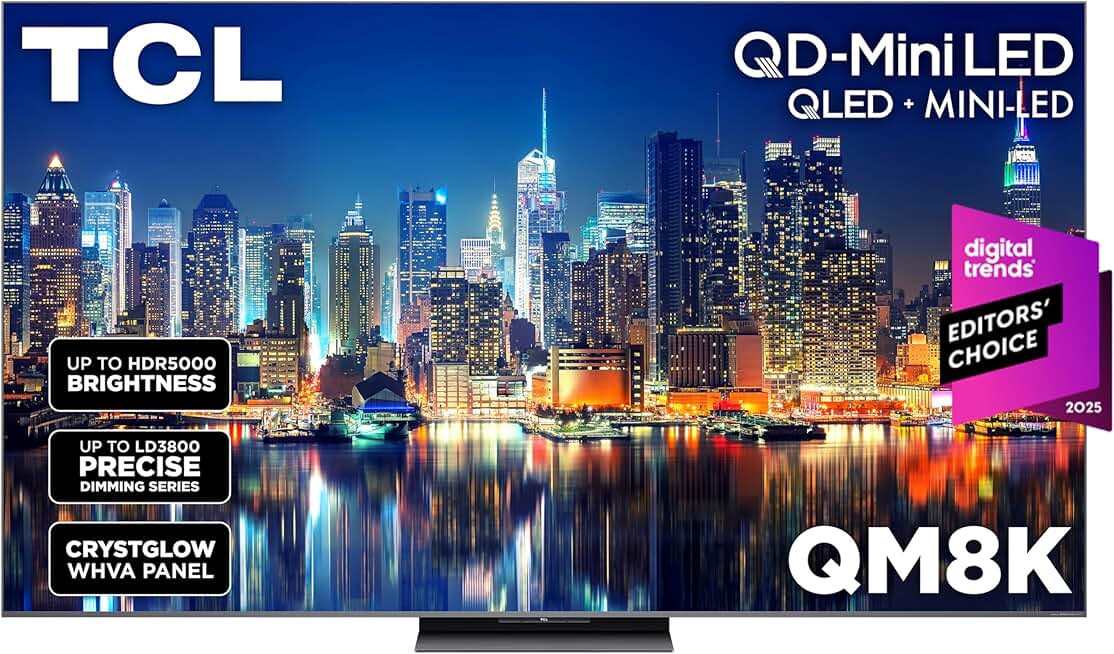
Mini LED QLED for high brightness and contrast · 120Hz-144Hz refresh rate for smooth motion · Anti-Reflective Wide Angle Screen for better viewing
This TCL Mini LED QLED TV provides a high refresh rate and advanced screen features, serving as a key example for QLED performance and motion clarity.

OLED panel for perfect blacks and infinite contrast · AI Super Upscaling for enhanced detail · Filmmaker Mode for accurate picture reproduction
The LG OLED B5 series offers a more accessible entry into OLED technology, providing a solid baseline for comparison with other display types.
As an Amazon Associate I earn from qualifying purchases. Prices may vary.
No comments yet. Be the first to share your thoughts!