

OLED's current lead in speed
OLED is the current standard for fast gaming displays. We've moved quickly from 120Hz being the ceiling to 480Hz panels becoming available. LG Display released a 27-inch 480Hz QHD panel in March 2024, which is likely the benchmark for the next two years.
It wasn't always this way. Early OLED panels struggled to achieve high refresh rates without significant compromises in image quality or lifespan. The core issue was the speed at which the organic materials could switch on and off. Fortunately, advancements in material science and driving schemes have largely solved those problems. We're now seeing OLEDs that not only hit incredibly high refresh rates but also maintain excellent color accuracy and response times.
The benefit of these high refresh rates is immediately noticeable in fast-paced games. Motion blur is reduced, and the overall experience feels much smoother and more responsive. But OLED isn’t resting on its laurels. MicroLED is coming, and it promises to shake things up. The question isn’t if MicroLED will compete, but when and how it will surpass OLED’s current dominance.
MicroLED as the inorganic alternative
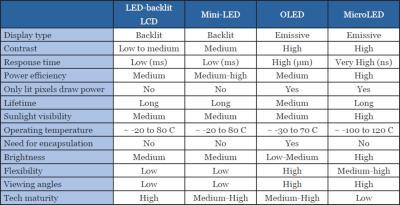
MicroLED represents a fundamentally different approach to display technology. Unlike OLED, which relies on organic compounds that emit light when electricity is applied, MicroLED uses microscopic LEDs – essentially tiny, inorganic light sources. This difference is significant. Because they’re inorganic, MicroLEDs theoretically avoid the degradation issues that plague OLEDs, like burn-in and limited lifespan.
MicroLED lasts longer and doesn't suffer from the organic decay that causes burn-in. These panels are much brighter and cover more of the color spectrum than OLED, but they are still stuck in the lab or high-end commercial installs because they are difficult to build.
The biggest hurdle right now is manufacturing. Creating millions of microscopic LEDs with consistent quality and placing them accurately onto a substrate is incredibly complex and expensive. This is why MicroLED displays are currently limited to very large, and very expensive, installations – we’re not seeing them in typical gaming monitors just yet. The cost needs to come down dramatically before MicroLED can truly compete with OLED on a mainstream level.
Technical hurdles for OLED
Pushing OLED refresh rates to extreme levels isn’t without its drawbacks. While 480Hz sounds amazing, there are underlying technical limitations. One key concern is panel lifespan. The faster you cycle the organic materials on and off, the quicker they degrade, potentially leading to image retention or uneven brightness. It’s a balancing act between performance and longevity.
Pixel response time is another critical factor. Even if an OLED panel can technically reach 480Hz, if the individual pixels are slow to switch, you’ll still experience motion blur. Discussions on forums like Blur Busters (Blur Busters Forums) highlight these limitations, with users detailing the challenges of achieving truly clear motion at extremely high refresh rates. A slow pixel response negates many of the benefits of a high refresh rate.
Maintaining accurate color reproduction at very high refresh rates is also difficult. The drive circuitry needs to be incredibly precise to ensure that each color is displayed correctly, even during fast-moving scenes. Any inaccuracies can result in color banding or other visual artifacts. This is where the engineering gets really tricky and why simply throwing more refresh rate at the problem isn’t always the solution.
- Panel Lifespan: Higher refresh rates can accelerate OLED degradation.
- Pixel Response Time: Slow pixels negate the benefits of high refresh rates.
- Color Accuracy: Maintaining accurate colors at high speeds is a challenge.
OLED vs. MicroLED: A Comparative Overview (Projected for 2026)
| Feature | OLED | MicroLED | Considerations |
|---|---|---|---|
| Refresh Rate Potential | Currently achieving very high rates, up to 480Hz in gaming displays | Potentially exceeding OLED, with theoretical limits much higher | MicroLED’s inorganic nature allows for faster switching without degradation, but widespread availability at high refresh rates is still developing. |
| Response Time | Extremely fast, generally under 1ms | Potentially faster than OLED due to inorganic LEDs | Both technologies offer very low response times, minimizing motion blur, but MicroLED may have a slight edge in ultimate speed. |
| Brightness | Good, but can be limited in smaller areas | Significantly higher peak brightness possible | MicroLED’s individual LEDs can achieve much greater luminance, improving visibility in bright environments. |
| Contrast Ratio | Excellent, offering true blacks | Excellent, with potential for even greater contrast | Both technologies provide superior contrast compared to LCD, but MicroLED’s ability to fully turn off individual pixels contributes to exceptional black levels. |
| Burn-in Risk | Susceptible to burn-in with static elements | Virtually no risk of burn-in | MicroLED’s inorganic composition makes it highly resistant to image retention, a key advantage over OLED. |
| Manufacturing Cost | Relatively mature, costs are decreasing | Currently very high due to complex manufacturing processes | MicroLED production remains a significant challenge, impacting its current price point. |
| Lifespan | Good, but degrades over time | Potentially much longer lifespan | MicroLED’s inorganic materials are expected to offer significantly improved longevity compared to OLED’s organic compounds. |
Qualitative comparison based on the article research brief. Confirm current product details in the official docs before making implementation choices.
What to expect by 2026
Predicting the future is always risky, but based on current trends, I believe OLED will continue to lead in refresh rate capabilities through 2026. We’ll likely see mainstream OLED gaming monitors reaching 500Hz or even 600Hz, with further improvements in response time and color accuracy. New material science breakthroughs will play a critical role in extending panel lifespan at these higher refresh rates.
MicroLED, however, will start to make significant inroads. While it’s unlikely to surpass OLED in peak refresh rate by 2026, we’ll see more MicroLED displays entering the market, particularly in the premium segment. These displays will likely focus on other advantages – brightness, color gamut, and lifespan – rather than solely chasing the highest refresh rate numbers.
The price gap between OLED and MicroLED will remain substantial. Expect MicroLED displays to be significantly more expensive, catering to early adopters and enthusiasts. New manufacturing techniques, like chip-on-substrate technology, will be crucial in reducing costs. I’m not sure if we’ll see MicroLED gaming monitors widely available by 2026, but we’ll definitely see more progress in that direction. It’s also possible that hybrid technologies, combining elements of OLED and MicroLED, will emerge.
Beyond Refresh Rate: The Full Picture
It’s easy to get caught up in the refresh rate race, but it’s crucial to remember that it’s not the only factor determining display quality. Response time, which measures how quickly a pixel changes color, is equally important. A high refresh rate is useless if the pixels are too slow to keep up, resulting in motion blur.
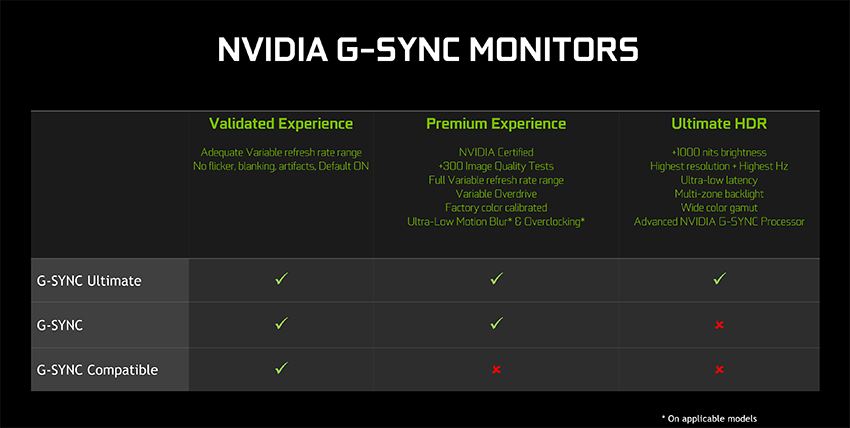
Input lag – the delay between your actions and what you see on the screen – is another critical consideration, especially for competitive gaming. Lower input lag translates to a more responsive and immersive experience. Technologies like NVIDIA G-Sync and AMD FreeSync help to synchronize the refresh rate of the display with the frame rate of your graphics card, eliminating screen tearing and stuttering.
Ultimately, the best display is the one that provides the most enjoyable and immersive experience for you. Consider your specific needs and priorities, and don’t get fixated on a single specification. A well-rounded display with a good balance of refresh rate, response time, input lag, and color accuracy will always outperform one that excels in only one area.
Featured Products

98-inch 8K Neo QLED display · NQ8 AI Gen3 Processor for enhanced picture quality · 8K AI Upscaling Pro for optimized content
This massive 8K Neo QLED TV showcases Samsung's advanced processing for stunning detail and upscaling capabilities.

83-inch OLED evo 4K display · Optimized for gaming with advanced picture processing · AI-Powered Gallery Edition for aesthetic integration
The LG G3 OLED evo offers a large, immersive 4K viewing experience with features tailored for gamers and artful display.
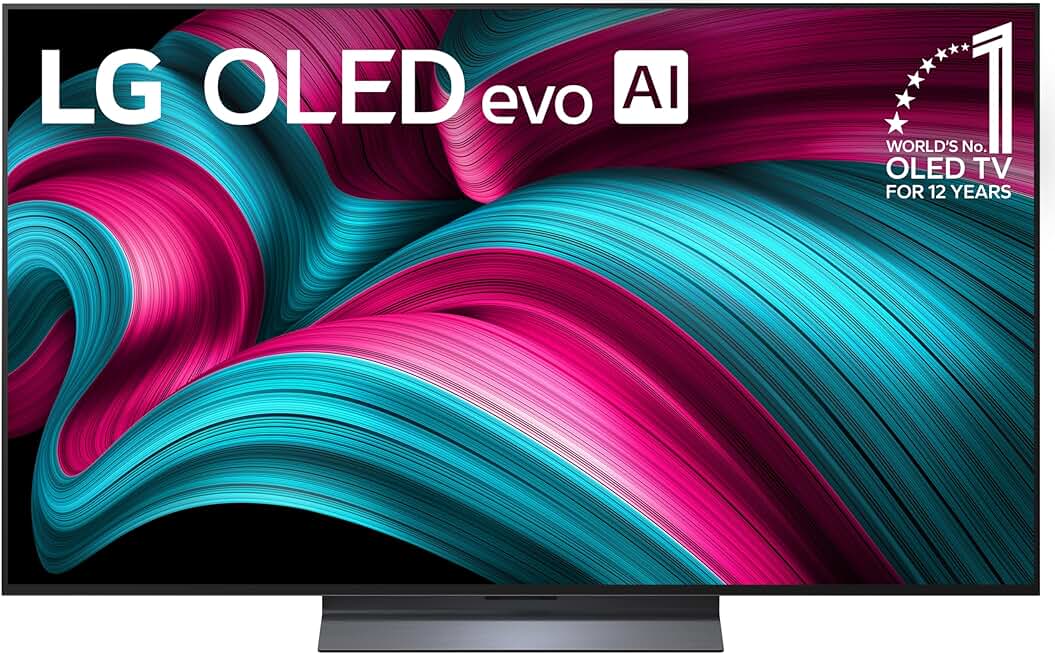
55-inch OLED evo AI 4K display · Dolby Vision and Dolby Atmos support for cinematic audio-visuals · AI Super Upscaling 4K for enhanced lower-resolution content
This LG C5 OLED evo provides a vibrant 4K picture with advanced AI upscaling and premium audio-visual technologies.

32-inch Full HD 1080p LED display · HDR support for improved contrast and color · Bluetooth connectivity for audio streaming
A more budget-friendly option, this Samsung LED TV offers Full HD resolution with HDR and convenient Bluetooth connectivity.
As an Amazon Associate I earn from qualifying purchases. Prices may vary.
No comments yet. Be the first to share your thoughts!